Welcome to the Distractions section! This is where you share details about any sights or sounds that might be present during a visit to your park. It’s not about perfection—it’s about transparency.
Many dogs thrive in different environments, but some are sensitive to certain triggers. By sharing what’s visible or audible around your space, you’re helping dog owners make informed decisions and ensuring a safe, positive experience for every pup.
When listing a private dog park, hosts should provide details about potential audible and visible distractions to help dog owners make informed decisions. This is especially crucial for dogs with reactivity, anxiety, or sensory sensitivities. Transparency about environmental factors ensures a positive experience for both dogs and their owners.
All parks are required to be free of dogs, other domestic animals and people during visits.
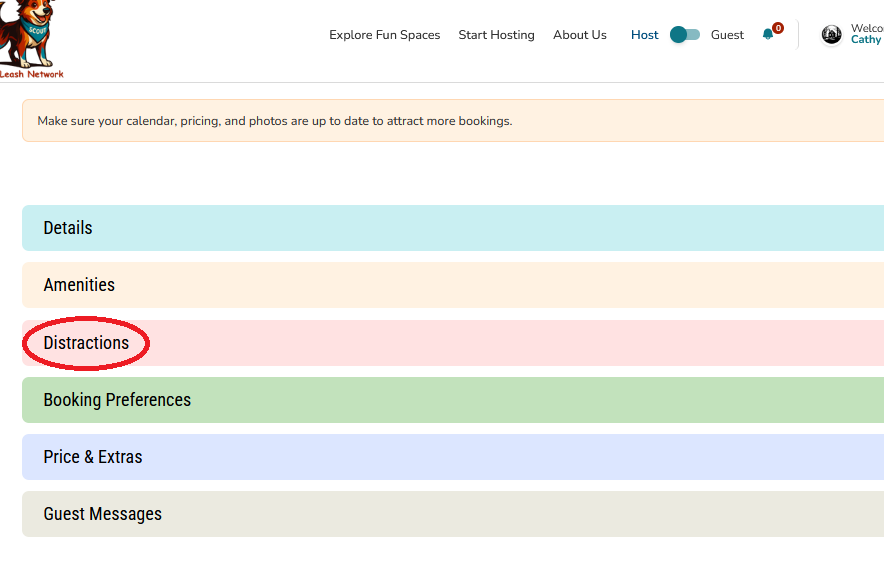
About This Section
In this section, you’ll describe potential visible and audible distractions that might be part of the park experience. This is especially helpful for dogs with reactivity, anxiety, or sensory sensitivities.
Being upfront about environmental factors builds trust, reduces surprises, and helps Guests choose the best setting for their dog’s needs.
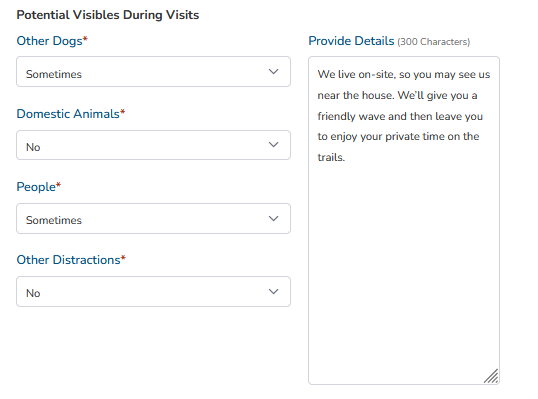
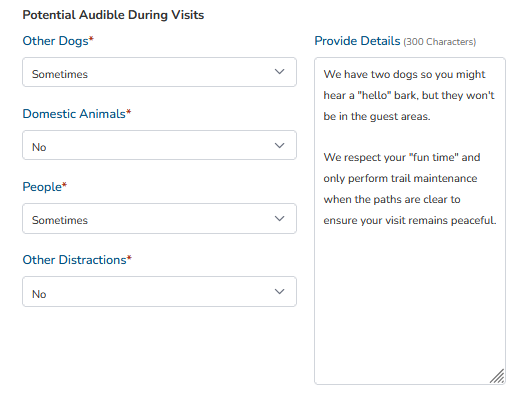
You’ll be able to select from dropdowns and add extra context in text boxes. No need to overthink—just share what’s typical or occasional in your area.
Types of Visible Distractions to Mention
- Open views of busy streets or sidewalks
- Nearby dog parks or yards with active dogs
- Wildlife presence (deer, squirrels, rabbits)
- Farm animals
- People walking by or working in adjacent areas
Types of Audible Distractions to Mention
- Nearby traffic, sirens, or construction noise
- Barking dogs from neighboring properties
- Loud machinery (lawnmowers, generators)
- Wildlife sounds (birds, squirrels, coyotes)
- Farm animals
Why This Matters
- Supports Sensitive Dogs
Helps owners of reactive or anxious dogs plan ahead and feel confident booking. - Builds Guest Trust
Transparency shows you care about every dog’s comfort and safety. - Reduces Surprises
Clear expectations lead to smoother visits and happier reviews. - Celebrates Your Setting
Even natural sounds and sights can be part of the charm—just let Guests know what to expect.
Examples of How Hosts Can Present This Information in Their Listing:
Include a Description
- “Our private dog park is fully fenced and secure, but please note that there is occasional traffic noise from the nearby road. Dogs who are sensitive to sounds may need extra reassurance.”
Encourage Owners to Reach Out with Questions
- “If your dog has specific sensitivities, feel free to message us before booking to ensure our space is a good fit.”
Tip for New Hosts:
If you’re unsure what counts as a distraction, think like a dog! Movement, noise, and scent-rich areas can all be exciting—or overwhelming. A little detail goes a long way.
Was this article helpful?
That’s Great!
Thank you for your feedback
Sorry! We couldn't be helpful
Thank you for your feedback
Feedback sent
We appreciate your effort and will try to fix the article